Why taking the leap matters?

Founder, Lean Ledger Ltd
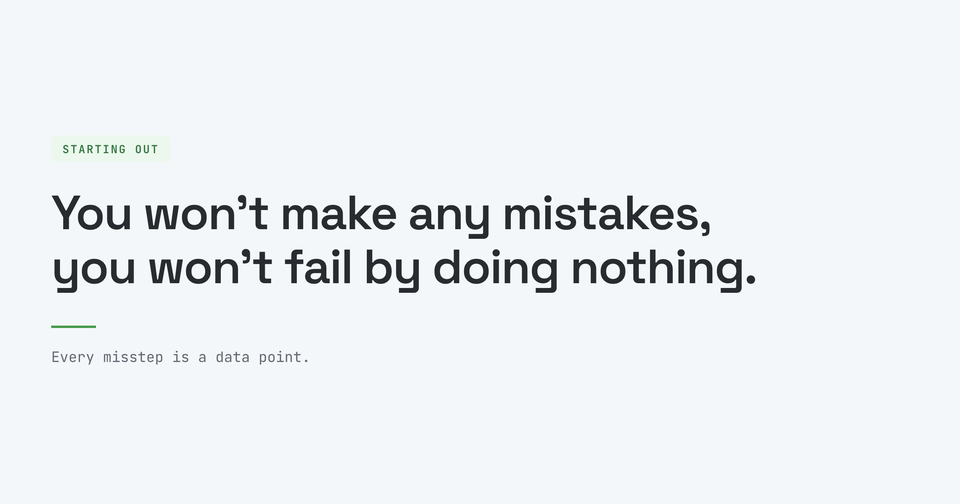
Hesitation, not failure, is what kills most business ideas, and the only way to find out if yours works is to put it in front of real people. Start small, treat every setback as data, and remember that no amount of planning substitutes for the clarity that comes from actually beginning.
The biggest obstacle to success isn't failure, it's hesitation. There is a compelling reason behind that. You won't make any mistakes, you won't fail by doing nothing. But is this productive? Is this the way you would like to spend your time, to spend your life? Many people sit on business ideas for months, even years, waiting for the perfect time. Well, there is no ideal time. Every successful company began with someone deciding to act, even when the outcome was uncertain.
When you start, you give your idea a chance to breathe. Market validation doesn't happen in your head; it happens when real people engage with your product or service. That's why even a small first step – a test run, a simple landing page, a basic prototype – is so powerful. It generates feedback, gives you clarity, and teaches you more than months of planning ever could.
Of course, starting isn't without risks. Business is rarely a straight line. There will be setbacks, and some ideas won't work. But here's the hidden truth: every misstep is a data point. Each mistake tells you something valuable about what your customers want, what they'll pay for, and what doesn't resonate. Far from wasted effort, these lessons could contribute to future success.
I've seen too many people paralysed by the fear of failing, while competitors move ahead. Technology today makes testing ideas cheaper and easier than ever before. You don't need to build the whole product; you need to prove one small part of it. Along the way, you'll gain more than business insights: you'll develop resilience, expand your network, and build confidence in your ability to adapt.
That said, let's be realistic. Starting a business is not easy. It takes energy, focus, and often money you can't afford to lose. Not every idea is good, and not every execution of even a good idea will succeed. Start small, test carefully, and treat the process as a series of experiments rather than a single do-or-die moment.
The best time to plant a tree was twenty years ago. The second-best time is now. Your business idea deserves a chance to exist in the real world.
Take a chance. Act now.

Luke Raczynski
ACCA-regulated accountant. Lean Ledger prepares limited company accounts for UK founders who'd rather have year end be a 30-minute conversation than a three-week scramble.